Commercial Waste Removal in Staines for regular business clearances
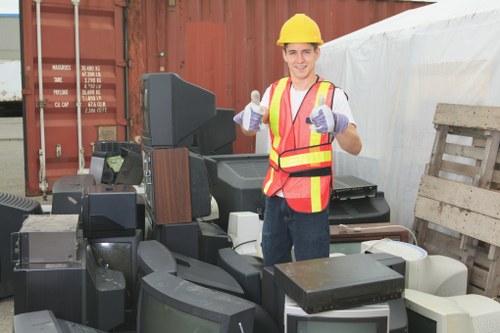
Commercial waste removal in Staines needs a practical, organised approach, especially when premises generate mixed rubbish, packaging, redundant stock and office materials at different times of the week. We provide a service shaped around business waste, from one-off clearances to planned collections that help keep working areas usable. The focus is on removing non-hazardous commercial waste efficiently, with clear separation where materials can be directed toward reuse, recycling or disposal.
If you are arranging waste removal for shops, offices, workshops, landlords or managed premises, the service can cover everyday accumulation as well as larger clear-outs after reorganisation, refurbishment or tenant change. Our aim is straightforward: take away the waste that is in the way, handle it sensibly and leave the site ready for the next stage of work. Where items need particular handling, that is considered as part of the collection plan.
Use the pages on this site to look at pricing, booking and the different service types if you want to match the right collection to the waste you have. A short enquiry can save time when the load includes mixed materials, bulky items or anything that may need careful sorting. If you already know the service you need, you can move straight to a quotation request.
Business waste collections that fit working premises
Many commercial customers need collections that work around normal trading, deliveries and staff access. That is why the service is best treated as part of the routine running of the premises rather than a last-minute tidy-up. We can collect bagged waste, cardboard, broken office furniture, shelving, obsolete fixtures and a range of everyday business rubbish, as long as it is suitable for the agreed service. The aim is to keep the process neat and predictable, with minimal disruption to staff and visitors.
For businesses that produce waste steadily, the right arrangement is often a repeating collection pattern rather than a single clear-out. That helps with storage, avoids overfilled bins and reduces the chance that rubbish builds up in corridors, stockrooms or rear yards. If you need to compare options before arranging a visit, the business waste removal page is a useful place to start because it focuses on commercial collections rather than domestic clearances.
Typical waste streams we can handle
Commercial waste tends to be varied, and the right approach depends on what has been gathered and how it is stored. The following examples are common on commercial jobs:
- general mixed rubbish from day-to-day operations
- cardboard and packaging from deliveries
- disused office items such as chairs, desks and storage units
- shop and stockroom clutter after a reset or refit
- light fixtures, shelving and non-hazardous fittings
Office, shop and premises clearances
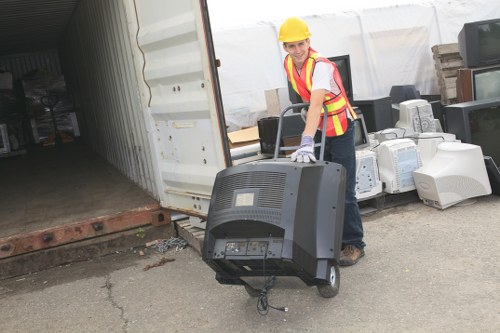
Some of the most common commercial jobs involve offices, retail units and shared premises that need a tidy, decisive clearance rather than an ongoing collection. Desks, pedestals, chairs, filing units, reception furniture and general office clutter can often be taken together if the load is suitable. Retail spaces may also need the removal of display fittings, storage pieces, redundant stock packaging and mixed refuse left after a change in layout or use. The point is to remove what no longer serves the space without creating more work for the customer.
Where a premises is being reconfigured, it helps to think through what should stay, what should be moved and what should go. That is especially useful in occupied offices, smaller units or sites with limited access to stairwells, lifts and shared corridors. If you need a broader overview of clearance work across different property types, the office clearance page and the flat clearance page both help illustrate how clearance services vary by setting.
Preparation that keeps the collection efficient
Two simple preparations usually make a clear difference: group similar items together and make sure access routes are clear enough for loading. Where possible, separate waste that is obviously recyclable, keep loose paperwork or valuables out of the collection area, and note any awkward items that may need moving from upper floors or narrow rooms. If there are parking limits, security checks or loading restrictions, mention them when requesting a quotation so the collection can be planned properly.
Furniture and bulky item disposal

Furniture disposal is a regular part of commercial waste removal because furniture is often the largest material occupying a room after a refurbishment, tenancy change or office reset. Chairs, tables, cabinets, shelving, sofas and reception pieces may all need lifting and loading, sometimes alongside packaging or smaller general waste. We handle furniture as part of a wider waste collection service, which means the load can be assessed in context rather than treated as isolated items.
There are several reasons businesses choose a collection for bulky items instead of trying to move them themselves. Large pieces can block access, need two-person handling or take too long to dismantle on site. A clear collection plan also helps when multiple floors are involved or when items have to be taken from back rooms, storage areas or customer areas without causing disruption. If you want a page focused on this type of load, see furniture clearance or, for item-specific disposal, furniture disposal.
When bulky items need extra thought
Not every item is handled in exactly the same way. Oversized furniture, damaged pieces, items with glass panels and heavy units with fixed shelving may need dismantling before loading. The main issue is not simply size but how safely the item can be removed from the premises. That is why photographs or a short description can be useful when you request a quote: they help identify access issues, stacking order and the likely amount of labour involved, all without turning the enquiry into a long exercise.
Clearance for garages, storage areas and back-of-house spaces
Garages, storerooms and back-of-house spaces often become the places where old fixtures, packaging, broken equipment and spare materials accumulate. For businesses, these areas matter because they are usually linked to access, inventory and safe storage. A clearance can recover usable floor space, but more importantly it can make the area easier to work in and easier to keep in order afterwards. We can remove mixed waste from these spaces as long as it falls within the agreed service and can be loaded safely.
These clearances are often best tackled after a simple sort has been carried out. If you already know that some items are being kept and others are being thrown away, it becomes much easier to manage the job in one visit. For related service pages, the garage clearance page and the loft clearance page both show how waste removal can be adapted to a space that is awkward, narrow or used for storage rather than day-to-day work.
Useful decisions before a clearance begins
Before the collection starts, decide whether any boxes, equipment or fixtures are to be left in place. This avoids accidental removal and reduces time spent sorting on the day. It also helps to make a rough note of any items that are especially heavy, fragile or awkwardly positioned. The clearer the picture of the waste area, the easier it is to plan the right vehicle space and labour for the job. That matters in commercial settings where time on site may need to be tightly managed.
Appliance, fridge and specialist item removal

Some commercial waste jobs involve appliances or specialist items that cannot just be treated as general rubbish. Fridges, freezers, microwaves, kettles, drinks equipment and similar items are common in kitchens, staff rooms and break areas, while some sites also need the removal of unwanted appliances after a refit or closure. These items can be bulky, awkward to carry and subject to different handling requirements from ordinary office waste, so it is sensible to separate them early in the process.
Where specialist items are included, the important point is to identify them clearly before collection rather than adding them in casually at the end. That helps with loading order and waste sorting, especially if they are combined with cardboard, packaging or other commercial rubbish. The fridge and appliance removal page gives a focused view of this type of waste, while the mattress and sofa disposal page is useful when bulky household-style items are part of a commercial clearance.
Separate handling and sensible sorting
It is often better to keep appliances apart from loose rubbish, particularly if the items still contain fittings, cables or parts that need checking before loading. If there are multiple specialist items, list them together in your enquiry so that the collection can be arranged with the right equipment and enough vehicle space. In practice, this makes the work smoother and reduces the risk of items being missed or separated at the last moment.
Hazard awareness, sorting and responsible disposal
Commercial waste removal should always begin with a sensible review of what is present. Some items are suitable for the normal collection route, while others need separate treatment or cannot be taken under the same terms. That is why mixed waste should be identified in broad categories before collection day. The aim is not to overcomplicate the process, but to make sure the right items are loaded and the wrong items are kept apart where necessary.
For anything that may need special attention, it is better to ask in advance than to leave it until the vehicle arrives. Certain contents may require a different service, additional paperwork or refusal from the standard collection if they are not appropriate for the agreed load. If you want to understand more about handling items with extra care, the hazardous waste disposal page is the relevant place to look, and the insurance and safety page explains how the business treats operational safety at a general level.
Why sorting matters to customers
Good sorting can reduce confusion, speed up loading and make the whole job easier to quote. It also helps if a premises produces different kinds of waste over time, because the collection can be matched to the actual load rather than a vague estimate. When you are preparing a quotation request, keep the description factual: what the items are, where they are located and whether there are any access limits. That gives enough detail to plan without requiring a long explanation.
About Staines
Staines-upon-Thames is a town in Surrey, positioned on the River Thames and historically known simply as Staines before the modern river-related styling was adopted in 2012. The river is central to the town’s identity, shaping both the landscape and the built environment through bridges, riverside walks and the open spaces that line the water. The Thames also places Staines within a long corridor of settlement, trade and transport that has influenced the town for centuries. Its location has made it a crossing point and a meeting place, with movement across and along the river remaining an important part of local life.
The town centre combines older streets with later commercial development, and visitors can still find traces of its market-town character alongside modern retail and office use. Nearby Lammas Recreation Ground provides open space by the water, while the Thames Path offers a continuous route for walkers following the river edge. Staines Bridge is one of the most recognisable local landmarks, linking the town to the opposite bank and reinforcing the importance of river crossing in the local landscape. Beyond the centre, the wider area includes residential neighbourhoods, business parks and road connections that tie the town into the wider Thames Valley. Staines railway station has also long been part of the town’s role as a transport hub, connecting it to London and nearby Surrey and Berkshire places. Together these features give Staines a setting that is both urban and riverside, with historic continuity visible in the pattern of movement, trade and public space.
The town’s cultural life includes riverside leisure, local shopping and a calendar of community activity that reflects its position within a busy commuter and service area. The surrounding stretch of the Thames contributes a sense of openness, while the built centre remains compact enough for streets, bridges and public spaces to be closely interrelated. That balance between water, transport and town centre development gives Staines a distinctive character within north-west Surrey.
Pricing, access and quotation details

Commercial waste collection is usually priced according to the amount of waste, the type of items, the ease of access and whether anything needs special handling. A straightforward load from ground level may be simpler than a mixed clearance from upper floors, back corridors or restricted loading bays. The more clearly the waste is described, the easier it is to give a sensible quotation. If the job includes furniture, appliances or bulky items, it helps to mention those specifically because they can affect both lifting and vehicle space.
For quotation purposes, the most useful information is often plain and brief. A short list of items, the collection location and any access constraints can be enough to start the process. If you want to review quotation guidance first, the pricing and quotes page explains the main factors in more detail, while the book online page is available if you are ready to move from planning to arranging a collection.
- Describe the main waste types and any bulky items
- State whether the waste is on one level or several floors
- Note any restricted access, parking issues or time limits
- Separate anything that should stay on site
- Ask for a quotation once the load is broadly clear
Supporting cleaner premises with the right collection
Businesses often find that waste becomes less of a problem when it is dealt with as part of an agreed routine rather than as an emergency clear-up. That might mean a one-off collection after a refit or a recurring service that stops rubbish building up in the first place. Either way, the service is most useful when it suits the way the premises actually work. We can therefore handle different load types under the same commercial waste removal umbrella, provided they fit the agreed scope.
If your premises generate cardboard, mixed refuse, redundant office items or occasional bulky waste, it is worth matching the collection to the real pattern of disposal rather than waiting until storage space is tight. You can use the service pages to explore related options such as waste removal, builders waste clearance and home clearance where appropriate, though the commercial route remains the best fit for business premises and trading spaces.
When to request a quotation
Ask for a quotation once you have a reasonable picture of the waste rather than trying to wait for perfect detail. A practical estimate is often enough to get the job moving, especially if the collection is time-sensitive or tied to a property change. If you are ready to proceed, send the details now and request a quotation in the clearest terms you can. We will use the information to match the collection to the waste presented.